Click on the labels to view more information.
-
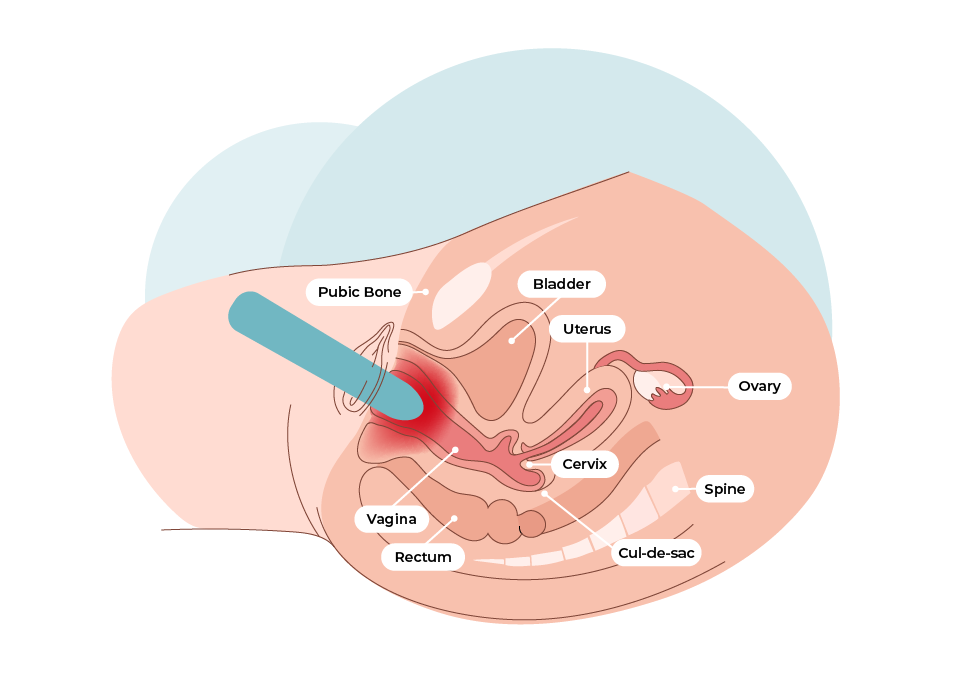
Bladder
The bladder is an organ that stores urine until it is ready to be passed out of the body. It is possible for endometriosis to grow on the bladder.
-
Uterus
The uterus is part of the female reproductive system. Every month the inner lining of the uterus grows and if the person does not get pregnant, then the lining is shed through the cervix into the vagina and out of the body. It is possible for endometriosis to grow on the uterus.
-
Pubic Bone
Located in the pelvis, the pubic bone can be felt near the front of the genitals.
-
Cervix
The cervix is the lower part of the uterus and it is an opening that allows menstrual blood to flow from the uterus to the vagina.
-
Vagina
The vagina is a canal that connects the uterus to the outside world. The vaginal canal changes during sex, with menstruation, during childbirth and with age.
-
Rectum
The rectum is part of the large intestine. It receive waste from the colon and stores it until it passes out of the body. It is possible for endometriosis to grow on the rectum.
-
Ovary
The ovary is part of the female reproductive system. Every month, unless when one is pregnant or has reached menopause, the ovary releases an egg that is ready to be fertilized. It is possible for endometriosis to grow on the ovary.
-
Spine
Our body’s main support structure that keeps us balanced so that we are
upright and flexible so we can move around. The spine also protects the
spinal cord, nerves and our organs.
-
Cul-de-sac
The cul-de-sac is the area between the uterus and the rectum. This is a common site for endometriosis to grow.
Click on the labels to view more information.
-
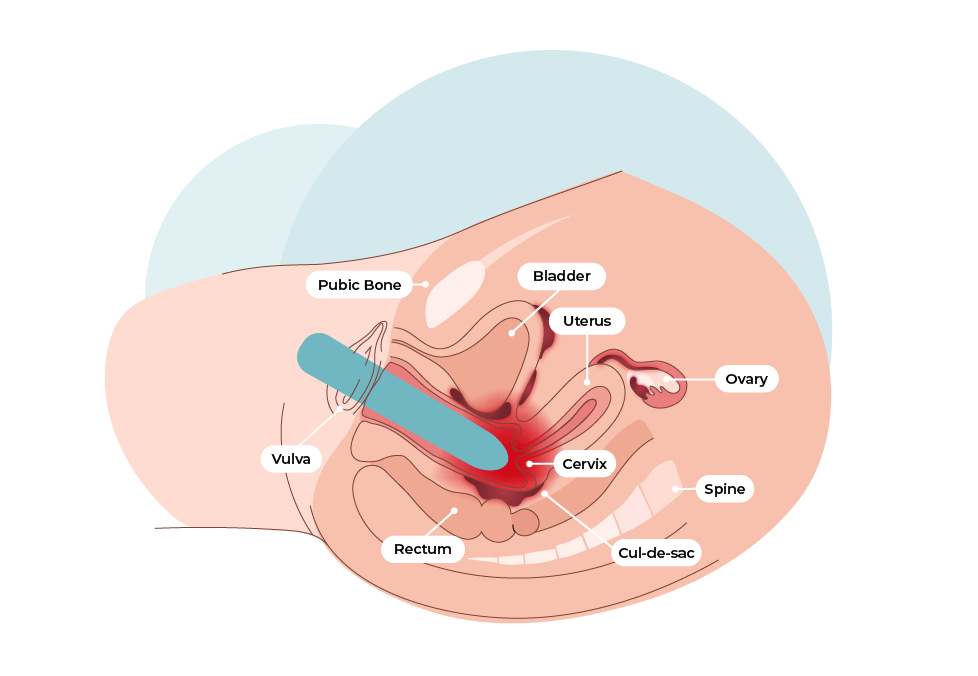
Bladder
The bladder is an organ that stores urine until it is ready to be passed out of the body. It is possible for endometriosis to grow on the bladder.
-
Uterus
The uterus is part of the female reproductive system. Every month the inner lining of the uterus grows and if the person does not get pregnant, then the lining is shed through the cervix into the vagina and out of the body. It is possible for endometriosis to grow on the uterus.
-
Pubic Bone
Located in the pelvis, the pubic bone can be felt near the front of the genitals.
-
Cervix
The cervix is the lower part of the uterus and it is an opening that allows menstrual blood to flow from the uterus to the vagina.
-
Vulva
External female genitalia which includes the labia, urethra, clitoris, vaginal opening and other anatomy.
-
Rectum
The rectum is part of the large intestine. It receive waste from the colon and stores it until it passes out of the body. It is possible for endometriosis to grow on the rectum.
-
Ovary
The ovary is part of the female reproductive system. Every month, unless when one is pregnant or has reached menopause, the ovary releases an egg that is ready to be fertilized. It is possible for endometriosis to grow on the ovary.
-
Spine
Our body’s main support structure that keeps us balanced so that we are
upright and flexible so we can move around. The spine also protects the
spinal cord, nerves and our organs.
-
Cul-de-sac
The cul-de-sac is the area between the uterus and the rectum. This is a common site for endometriosis to grow.

